
How Much is My House Worth in San Jose? Free Home Value Estimator
How Much is My House Worth in San Jose? Free Home Value Estimator
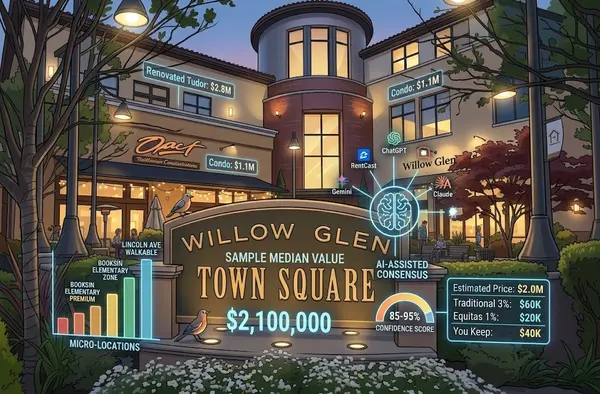
Determining what your home is worth in San Jose requires looking beyond generic national algorithms. While an online valuation provides an immediate baseline, an accurate market valuation integrates real-time Silicon Valley MLS sales, active inventory velocity, property condition, and hyper-local neighborhood dynamics.
The 3 Ways to Value a House: AVM vs. CMA vs. Appraisal
Understanding the distinction between property valuation methods prevents costly pricing mistakes. Homeowners typically encounter three distinct valuation models:
| Method | Source / Mechanism | Accuracy Level | Best Used For | Turnaround Time |
|---|---|---|---|---|
| Automated Valuation Model (AVM) | Proprietary algorithms aggregating public tax records, historical transfers, and macro trends. | Moderate (±4% to 10% variance) | Initial discovery, equity tracking, broad neighborhood health. | Instant (< 30 seconds) |
| Comparative Market Analysis (CMA) | Licensed real estate broker evaluating pending sales, active competition, micro-pockets, and interior finishes. | High (±1% to 2% precision) | Setting list price, negotiating offers, planning seller net proceeds. | 4 to 24 hours |
| Licensed Appraisal | Independent certified appraiser conducting on-site inspection for lender underwriting guidelines. | High (Point-in-time value) | Mortgage approval, refinancing, tax assessments, estate settlement. | 3 to 7 business days |
Why Basic Algorithmic Estimators Miss the Mark in San Jose
National valuation tools (such as Zillow Zestimates or Redfin Estimates) rely purely on statistical modeling. They cannot evaluate:
- Interior condition and capital improvements: A $120,000 chef's kitchen remodel or brand-new HVAC system reads identically in public records to an original 1970s interior.
- Micro-neighborhood boundaries: Across San Jose, being inside a specific high-performing school boundary (such as Cupertino Union, Lynbrook, or Silver Creek) can swing property values by $150,000 to $300,000 across a single street divider.
- Topography, lot utility, and micro-location: An algorithm cannot detect street noise, power line easements, high-voltage corridors, steep hillside slopes, or private cul-de-sac premiums.
- Permitted vs. unpermitted square footage: Unpermitted additions can artificially inflate automated estimates, creating severe appraisal discrepancies during escrow.
Combining a multi-source valuation engine with professional brokerage oversight bridges the gap between raw data and real-market performance.
5 Core Drivers of Your San Jose Home’s Valuation in 2026
When evaluating your property against local market realities, five primary variables dictate final contract pricing:
1. Hyper-Local Comparable Sales (The 90-Day Window)
Historical sales older than 3 to 6 months lose predictive power during shifting interest rate environments. Accurate valuations focus on closed transactions within a 0.5-mile radius over the preceding 60 to 90 days, adjusted for lot orientation, architectural style, and gross living area (GLA).
2. Live Competition and Months of Inventory
Your property does not sell in a vacuum; it competes against active inventory. In sub-markets where housing supply hovers below 1.5 to 2.0 months, sellers retain pricing leverage, resulting in sale-to-list ratios exceeding 100%. Conversely, when inventory expands, buyers gain negotiation power over inspection credits and repair contingencies.
3. Modernized Floor Plans and Energy Infrastructure
Silicon Valley buyers prioritize move-in-ready, turnkey homes. High-return improvements that elevate appraisal valuations include:
- Functional open-concept living and dedicated work-from-home office configurations.
- Modern electrical service (200-amp panels), solar paired with battery storage, and Level 2 EV charging readiness.
- Permitted Accessory Dwelling Units (ADUs) providing rental income or multi-generational living capability.
4. Sale-to-List Ratio and Absorption Velocity
Homes priced accurately within the initial 10 to 14 days of listing generate peak buyer urgency and multiple offer dynamics. Overpricing by even 3% to 5% leads to extended days on market (DOM), often resulting in public price reductions that degrade perceived market value.
5. Local Transfer Taxes: Navigating San Jose Measure E
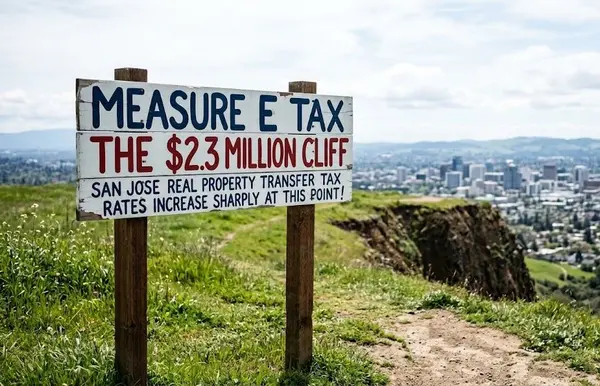
Gross sales price does not equal seller profit. San Jose features a tiered Measure E transfer tax that impacts real estate transfers over statutory thresholds (starting at $2M+). Precision valuations must calculate these municipal closing expenses from day one to protect your expected take-home equity.
Gross Valuation vs. Seller Net Proceeds: What You Actually Keep
A high valuation on paper means very little if traditional transaction fees erode your home equity. In high-value real estate markets, traditional 5% to 6% broker commissions remove $75,000 to $150,000 directly from your closing proceeds.
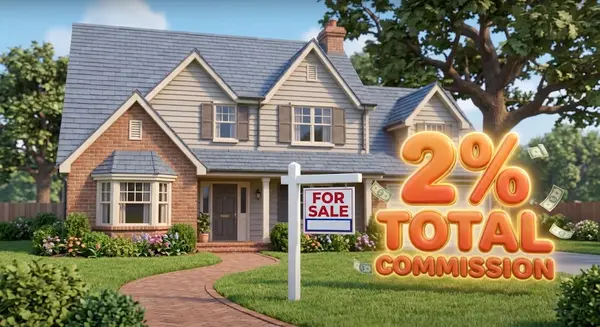
Equitas Homes utilizes modern listing technology to provide full-service representation for a 1.0% listing fee, enabling San Jose sellers to preserve tens of thousands in liquid equity without compromising on professional photography, 3D Matterport tours, MLS syndication, or master negotiations.
| Sale Price Tier | Traditional Listing Broker Fee (2.5%) | Equitas Homes 1.0% Listing Fee | Preserved Homeowner Equity |
|---|---|---|---|
| $1,400,000 | $35,000 | $14,000 | $21,000 |
| $1,800,000 | $45,000 | $18,000 | $27,000 |
| $2,200,000 | $55,000 | $22,000 | $33,000 |
| $3,000,000 | $75,000 | $30,000 | $45,000 |
Note: Calculations reflect listing brokerage compensation. Buyer agent compensation, if offered, is entirely discretionary and set by the seller.
4 Steps to Determine Your San Jose Home’s Value Before Listing
- Pull Instant Baseline Data: Run your address through the valuation tool to access real-time neighborhood sales data, active listing snapshots, and median price-per-square-foot benchmarks.
- Review Pending and Under-Contract Listings: While closed sales illustrate where the market was 30 to 60 days ago, pending listings indicate real-time market sentiment and current buyer pricing tolerance.
- Audit Property Condition and Features: Compile a comprehensive list of all permitted additions, roof replacements, mechanical updates, and architectural enhancements.
- Request an On-Site or Hyper-Local Net Sheet: Have an experienced local broker review your home's unique layout, staging potential, and exact closing costs to establish an aggressive, realistic pricing strategy.
Frequently Asked Questions (FAQ)
How accurate are free online home value estimators in San Jose?
Online home valuation tools provide a solid initial baseline, generally falling within 3% to 8% of market value in areas with high housing turnover and homogenous properties. However, their accuracy decreases significantly for custom homes, properties on oversized or hillside lots, or homes with extensive recent interior renovations, as computer models cannot inspect physical condition or unrecorded upgrades.
What is the fastest way to get an accurate home value in San Jose?
The fastest and most reliable approach is using the San Jose Free Home Value Estimator to instantly generate comparative sales data, followed by a personalized Comparative Market Analysis (CMA) conducted by a local listing broker who adjusts for square footage, school ratings, and recent neighborhood comps.
Does an assessed value match the actual market value of a home?
No. In California, assessed value is strictly utilized by county tax assessors to calculate annual property taxes under Proposition 13 guidelines (limiting assessed value increases to a maximum of 2% annually unless reassessed upon sale or major construction). Market value is the price a qualified, willing buyer will pay on the open market today, which is frequently much higher than the assessed tax base.
What home improvements yield the highest return on value in San Jose?
Kitchen refreshes, primary bathroom modernizations, fresh interior/exterior neutral paint, updated energy-efficient systems, and professional staging consistently deliver the highest return on investment (ROI). Major structural renovations rarely yield a 100% dollar-for-dollar return unless they add permitted gross living area or functional bedrooms and bathrooms.
How does a 1% listing fee impact my total net value?
A 1% listing fee directly increases your net proceeds at closing by 1.5% to 2% of the home's total gross sales price. On a typical $1,800,000 San Jose property sale, reducing the listing commission from traditional rates down to 1% preserves $27,000 to $36,000 in home equity, providing the exact same full-service MLS distribution, targeted buyer marketing, and professional negotiation support.
Categories
Recent Posts




GET MORE INFORMATION

Broker Associate License ID: DRE 01151598
+1(408) 561-1321 | louis@equitashomes.com