
San Jose Measure E Transfer Tax (2026 Guide): How a 1% Listing Fee Offsets the $2.3M Cliff
Executive Summary: San Jose Measure E at a Glance
What it is: San Jose’s Measure E is a gross real property transfer tax charged on residential and commercial sales exceeding statutory value limits. Following the five-year Consumer Price Index (CPI) adjustment, properties selling at or below $2,300,000 are 100% exempt.
The Cliff Effect: Crossing $2,300,000 by just $1 triggers an immediate 0.75% tax on the entire sale price (minimum $17,250.01).
The Net Equity Solution: By leveraging our 1% listing fee (or a capped 2% total fee if an unrepresented buyer purchases directly), San Jose sellers save between $35,000 and $100,000+ in commission—completely wiping out the cost of Measure E and putting thousands of dollars in extra cash into seller proceeds at closing.
2026 San Jose Measure E Tax Brackets & Rates
Enacted by San Jose voters to fund municipal affordable housing and homelessness prevention initiatives, Measure E is administered by the City of San José and collected by the Santa Clara County Clerk-Recorder at deed recording.
Crucially, Measure E is not a marginal tax. Once your transaction crosses a tier threshold, the rate applies to the gross consideration (the total purchase price), not merely the dollars above the threshold.
| Sale Price Range | Measure E Rate | Tax Due at Closing |
|---|---|---|
| $0 to $2,300,000.00 | 0.00% (Exempt) | $0 |
| $2,300,000.01 to $5,000,000.00 | 0.75% of full sale price | $17,250.01 to $37,500.00 |
| $5,000,000.01 to $10,000,000.00 | 1.00% of full sale price | $50,000.01 to $100,000.00 |
| Over $10,000,000.00 | 1.50% of full sale price | $150,000.00+ |
Note: Measure E applies in addition to the standard Santa Clara County transfer tax ($1.10 per $1,000) and the City of San Jose conveyance tax ($3.30 per $1,000).
📊 San Jose Seller Net Proceeds & Measure E Offset Calculator
Calculate your exact Measure E tax obligation and discover how much you save when combining our 1% listing fee or 2% unrepresented buyer program against a traditional 5% broker fee.
The Takeaway: Even after paying the full Measure E tax bill out of seller funds, choosing a modern commission structure keeps tens of thousands of extra dollars in your pocket.
The $2,300,000 "Cliff Effect" and Pricing Traps
Because Measure E applies to the gross transaction amount, crossing the threshold creates an aggressive pricing cliff. This directly impacts high-demand San Jose neighborhoods like Willow Glen, Almaden Valley, Rose Garden, and Cambrian Park where typical single-family homes trade between $2.1M and $2.8M.
- Offer A: $2,300,000 — Fully exempt. Measure E tax = $0.
- Offer B: $2,310,000 — Triggers Tier 1. Measure E tax (0.75%) = $17,325.
By accepting an offer that is just $10,000 higher on paper, the seller incurs a $17,325 tax liability at escrow, resulting in $7,325 less in actual net cash before standard title fees and broker commissions.
Sellers must calculate net proceeds before accepting offers that hover between $2,300,001 and $2,325,000. Unless an offer reaches at least $2,317,500, a clean $2,300,000 offer leaves more net cash in the seller’s hands.
How Our 1% Listing Fee & 2% Unrepresented Buyer Model Offsets the Cost
While the City of San Jose imposes Measure E to generate municipal revenue, sellers can proactively control their largest closing expense: real estate broker commissions.
On a $2.5 million home, traditional brokerage commissions of 5% to 6% consume $125,000 to $150,000 of home equity. Adding an $18,750 Measure E tax pushes total selling friction above $143,000.
Scenario 1: Our Full-Service 1% Listing Fee
When listing with us at a 1% fee and offering a competitive 2.5% to the cooperating buyer broker (3.5% total commission):
- Traditional 5% commission on $2.5M: $125,000
- Equitas Homes 3.5% total fee on $2.5M: $87,500
- Direct commission savings: $37,500
- Measure E tax owed: $18,750
- Net result: The $37,500 commission savings completely pays off the Measure E tax bill and leaves $18,750 in surplus equity in your bank account.
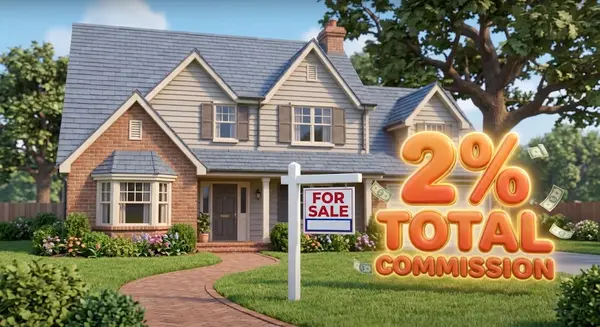
Scenario 2: 2% Total Fee When the Buyer Has No Outside Agent
With the nationwide decoupling of broker fees, a significant percentage of tech-savvy Silicon Valley buyers now attend open houses unrepresented to negotiate price reductions directly.
When an unrepresented buyer purchases your home, we cap our total commission at just 2% for handling dual administrative coordination, disclosures, and escrow management:
- Traditional 5% commission on $2.5M: $125,000
- Our 2% total fee on $2.5M: $50,000
- Direct commission savings: $75,000
- Measure E tax owed: $18,750
- Net result: You offset Measure E four times over, securing an extra $56,250 in net proceeds compared to standard brokerage models.
Who Actually Pays Measure E in San Jose?
Under Chapter 4.59 of the San Jose Municipal Code, both the buyer and seller share joint and several liability for the transfer tax. However, real-world escrow customs dictate how closing costs are settled:
- Santa Clara County Custom: City transfer taxes are traditionally divided 50/50 between buyer and seller, while county transfer taxes are commonly paid by the seller.
- Contract Negotiation: In hot San Jose submarkets with multiple offers, sellers can counter to mandate that the buyer pays 100% of Measure E as a condition of sale. In balanced or slower market conditions, buyers frequently request seller credits to offset their half.
About the Author: Louis Fong
Louis Fong is a Silicon Valley real estate specialist and founder of Equitas Homes, championing full-service 1% listing fees for home sellers across San Jose, Willow Glen, Almaden Valley, and Cupertino. Combining data-driven pricing strategies with modern fee structures, Louis helps homeowners protect their net equity in every market environment.
Categories
Recent Posts



GET MORE INFORMATION

Broker Associate License ID: DRE 01151598
+1(408) 561-1321 | louis@equitashomes.com